Integrating a Pickleball Paddle PNG into Your Pickleball Shirt Production Workflow
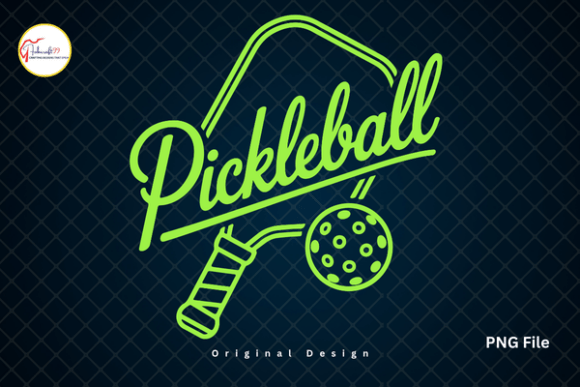
For creators, small business owners, and DIY enthusiasts, the transition from a digital concept to a tangible product requires more than just artistic inspiration; it demands technical precision and workflow efficiency. When developing merchandise for the rapidly growing pickleball market, utilizing a high-quality Pickleball Paddle PNG is often the critical first step in a broader production chain. This specific asset—a minimal design featuring stylish script typography and a neon green outline illustration—serves as a foundational element for creating professional-grade Pickleball Shirt apparel and accessories. Understanding how to leverage this digital file effectively ensures that the final output meets both aesthetic standards and commercial durability requirements.
The utility of a transparent background PNG extends beyond simple image placement. In a practical design workflow, this format acts as a modular component that interacts seamlessly with raster and vector editing software, print-on-demand platforms, and direct-to-garment (DTG) printers. Whether you are preparing inventory for a local tournament or setting up an automated e-commerce store, the integrity of your source file dictates the quality of your merchandise. This guide explores the operational aspects of integrating this specific pickleball graphic into your creation process, focusing on preparation, compatibility, and execution.
Pre-Production Assessment and File Preparation
Before importing any asset into your design environment, a technical assessment is necessary to prevent downstream errors. While the Pickleball Paddle PNG is provided in high resolution, verifying its specifications against your intended output method is a best practice in production planning. For apparel manufacturing, specifically Pickleball Shirt designs, resolution requirements vary significantly based on the printing technology.
- Dimension Verification: Ensure the pixel dimensions translate to at least 300 DPI at the desired physical print size. A design intended for a full-front chest print typically requires a minimum width of 4500 pixels to maintain crisp edges on fabric.
- Transparency Check: Open the file in your editing software to confirm the alpha channel is intact. Residual white pixels around the neon green outline can create unwanted boxes on dark garments, particularly during sublimation or DTG processes.
- Color Profile Alignment: Digital screens display RGB color, while textile printers utilize CMYK. The bold neon green outline mentioned in the design description may shift during conversion. Create a test swatch or soft proof to anticipate color variance before committing to a full production run.
This preparation phase minimizes waste and rework. By validating the Pickleball Paddle PNG upfront, you establish a reliable baseline for all subsequent creative decisions. This is especially relevant for team merch or athletic lifestyle graphics where consistency across multiple items is paramount.
Design Integration and Composition Strategies
Once the file is validated, the integration phase begins. The minimal nature of this specific design—combining script typography with a paddle and ball illustration—offers distinct advantages in layout flexibility. Unlike complex, dense illustrations, this clean aesthetic allows for rapid adaptation across different product types without losing visual impact.
When designing a Pickleball Shirt, consider the interaction between the graphic and the garment’s construction. Placement is a functional decision as much as an aesthetic one. For performance wear, positioning the design away from high-friction areas or seam lines ensures longevity and comfort. The neon green outline style provides excellent contrast against dark backgrounds like navy, black, or charcoal, making it ideal for creating visually striking sports apparel. Conversely, when applying this design to lighter substrates for tumblers or tote bags, you may need to add a subtle drop shadow or adjust the outline weight to maintain visibility.
Efficiency in this stage comes from mastering non-destructive editing workflows. Use smart objects in Photoshop or linked files in Illustrator to retain the original resolution of the Pickleball Paddle PNG while experimenting with scale and orientation. This approach allows you to create multiple product mockups from a single master file, streamlining the process for creators managing extensive catalogs. For those producing DIY sublimation projects, this modularity enables quick resizing for varied templates without degrading image quality.
Platform Compatibility and Output Optimization
The versatility of a PNG file lies in its broad compatibility, yet each output platform has unique ingestion protocols. Understanding these nuances is essential for professionals and hobbyists alike. The transition from a local hard drive to a production facility involves specific optimization steps to ensure the Pickleball Shirt or accessory matches your digital proof.
Print-On-Demand and E-Commerce Integration
For entrepreneurs using platforms like Printful, Printify, or Etsy, the Pickleball Paddle PNG serves as the primary production asset. These systems generally require sRGB color profiles and specific canvas sizes. Before uploading, flatten the image if necessary to reduce file size without sacrificing quality, but always retain a master layered file locally. Automated systems may misinterpret transparency if the file metadata is corrupted, so exporting a fresh PNG specifically for each platform is often safer than reusing old exports.
Direct-to-Garment and Sublimation Workflows
In-house production requires stricter color management. If you are printing Pickleball Shirts using DTG technology, the neon green elements may require a white underbase layer to achieve vibrancy on colored fabrics. Verify your RIP (Raster Image Processor) software settings to ensure the transparent areas remain truly transparent. For sublimation projects targeting mugs, tumblers, or polyester apparel, remember that the ink becomes part of the fiber. The clean lines of this minimal design are particularly well-suited for sublimation, as they resist bleeding better than heavy gradient fills. Always perform a press test to calibrate temperature and time, ensuring the bold outline remains sharp after heat application.
Quality Control and Post-Production Validation
A robust workflow includes verification after the initial output. Quality control is not merely about checking for defects; it is about validating that the digital asset translated correctly to the physical medium. When reviewing samples of your Pickleball Shirt or accessories, assess the following criteria:
- Edge Definition: Inspect the boundary between the neon green outline and the fabric. Jagged edges indicate insufficient resolution or improper masking in the source PNG.
- Color Accuracy: Compare the printed result against your calibrated monitor. Note any significant shifts in the neon green hue and document the necessary adjustments for future batches.
- Typography Legibility: Script fonts can sometimes lose detail during printing. Ensure the text remains readable at the actual print size, especially on smaller items like stickers or decals.
Documenting these observations creates a feedback loop that improves future projects. If the Pickleball Paddle PNG consistently requires adjustment for a specific printer, create a dedicated preset or action to automate that correction. This systematic approach transforms isolated tasks into a repeatable, scalable business process.
Strategic Application for Diverse User Groups
The application of this asset varies depending on the user's role and objectives. Recognizing where this tool fits into different workflows helps maximize its value.
For Small Business Owners and Marketers: Speed to market is critical. This pre-made, high-resolution asset eliminates the lead time associated with custom illustration. It allows for rapid prototyping of seasonal collections or tournament-specific merchandise. Focus your energy on marketing and customer acquisition rather than asset creation, using the PNG as a reliable constant in your product lineup.
For Educators and Coaches: Team identity fosters cohesion. Using a consistent, clean design across uniforms, bags, and warm-up gear establishes a professional brand presence. The minimal aesthetic avoids visual clutter, making it appropriate for institutional or educational settings where overt commercial branding might be restricted.
For Hobbyists and DIY Creators: Accessibility does not mean compromising quality. This resource bridges the gap between amateur enthusiasm and professional results. When engaging in personal projects like custom gifts or club fundraisers, the included transparent background simplifies the learning curve for beginners navigating design software, allowing focus on the joy of creation rather than technical troubleshooting.
Long-Term Asset Management and Organization
Sustainable creative work relies on organized digital infrastructure. Treat the Pickleball Paddle PNG as a permanent library asset rather than a disposable file. Implement a standardized naming convention that includes descriptors such as "NeonGreen," "Script," "Minimal," and version numbers. Store the master file in a cloud-synced folder accessible across devices, ensuring you can respond to opportunities or modifications regardless of location.
Furthermore, maintain a log of successful applications. If a particular sizing or color adjustment yielded excellent results on a Pickleball Shirt, record those parameters alongside the asset. Over time, this builds a proprietary knowledge base that accelerates future workflows. For teams and businesses, this documentation ensures continuity even if personnel changes occur.
Ultimately, the value of a digital design asset is realized only through effective implementation. By approaching the Pickleball Paddle PNG with a process-oriented mindset—focusing on preparation, technical compatibility, and quality validation—you transform a simple graphic into a versatile engine for production. Whether creating competitive team merch, retail apparel, or personalized gifts, this structured approach ensures that your passion for the game is matched by the professionalism of your output. The intersection of sport and commerce thrives on such attention to detail, turning enthusiastic participation into polished, enduring products.