Soccer Ball and Realistic Football Goal Game Assets: Evaluating Visual Resources for Design and Development
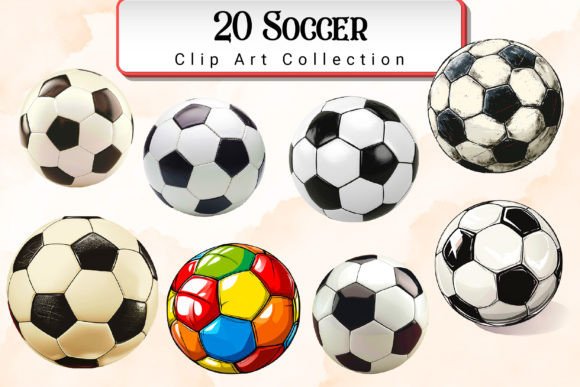
Selecting the appropriate visual assets for sports-related projects requires a nuanced understanding of both aesthetic appeal and technical utility. When searching for a "Soccer Ball. Realistic Football Goal Gam" symbol or graphic, professionals are typically looking for more than just a generic representation of the sport. They require high-fidelity imagery that captures the texture of synthetic leather, the precise geometry of panel stitching, and the authentic perspective of a goal structure. Whether for mobile game development, sports betting interfaces, editorial content, or marketing materials, the distinction between a stylized icon and a realistic asset significantly impacts user engagement and perceived quality.
This evaluation focuses on the specific category of realistic football goal games and soccer ball symbols available in EPS, JPG, and transparent PNG formats. Understanding the tradeoffs between these formats, as well as the stylistic differences between realism and abstraction, is essential for making an informed procurement or creation decision. The right choice depends heavily on the intended application, the target demographic, and the technical constraints of the final platform.
Defining Realism in Football Goal Game Assets
The term "Realistic Football Goal Gam" generally refers to digital assets that prioritize physical accuracy over artistic interpretation. Unlike flat vector icons used for navigation or simple infographics, realistic assets attempt to replicate real-world physics and material properties. This includes accurate lighting models that show specular highlights on the ball’s surface, proper shadow casting relative to the goal posts, and correct proportions based on official FIFA or league regulations.
For adults researching resources for professional applications, realism serves a functional purpose beyond aesthetics. In simulation games or training software, visual fidelity correlates with user immersion and trust. A soccer ball that deforms correctly upon impact or a goal net that reacts with appropriate tension provides immediate feedback that stylized graphics cannot offer. However, this level of detail comes with specific requirements. Realistic assets often demand higher resolution displays and more processing power, which must be weighed against the performance goals of the project.
Technical Format Considerations: EPS vs. PNG vs. JPG
When evaluating "Soccer Ball. Realistic Football Goal Gam" resources, the file format dictates the asset's versatility. Each format serves a distinct role in the production pipeline, and selecting the wrong one can lead to workflow inefficiencies or quality degradation.
- EPS (Encapsulated PostScript): This vector-based format is ideal for logos, print media, and scalable UI elements. However, true photorealism is difficult to achieve in pure vector format. EPS files labeled as "realistic" often contain embedded raster images or rely on complex gradient meshes that may not render consistently across all software. Choose EPS only if infinite scalability is required or if the asset will be modified extensively in Adobe Illustrator.
- Transparent PNG: For digital interfaces, web design, and game sprites, transparent PNGs are frequently the superior choice. They preserve alpha channels, allowing the soccer ball or goal to be composited over dynamic backgrounds without unsightly white boxes. The tradeoff is file size; high-resolution realistic PNGs can be heavy, potentially impacting load times in web environments. They are best suited for fixed-size displays where crisp edges are necessary.
- JPG (JPEG): Best reserved for full-scene compositions, background textures, or editorial photography. JPGs do not support transparency, making them unsuitable for isolated symbols unless the background is intentionally part of the design. While they offer excellent compression for photographic data, artifacts can appear around high-contrast edges like goal posts, reducing professional polish.
Comparing Realistic Assets Against Stylized Alternatives
A critical decision point for designers and developers is whether to commit to realism or opt for stylized alternatives. While the search intent focuses on realistic football goal games, it is valuable to understand where this style fits within the broader spectrum of sports graphics.
Stylized and Flat Design: Cartoonish or flat-design soccer balls are ubiquitous in casual mobile gaming and youth-oriented branding. These assets load instantly, scale perfectly, and communicate the concept of "soccer" without visual noise. If the primary goal is rapid recognition rather than immersion, or if the target audience skews younger, realistic assets may actually be detrimental due to their visual complexity and serious tone.
3D Renders vs. 2D Photography: Within the realistic category, there is a further divergence between photographed assets and 3D-rendered symbols. Photographed soccer balls carry the imperfections of reality—scuffs, grass stains, and inconsistent lighting—which adds authenticity but limits customization. Conversely, 3D-rendered "Realistic Football Goal Gam" symbols offer pristine consistency. Lighting, angle, and texture can be adjusted to match the exact color grading of a user interface. For product catalogs or cohesive app design, 3D renders often provide better long-term value despite a potentially higher initial cost or creation time.
Evaluating Quality and Authenticity Indicators
Not all assets marketed as "realistic" meet professional standards. When comparing options, scrutinize the following technical and aesthetic markers to ensure the resource aligns with project requirements:
- Panel Geometry Accuracy: Modern soccer balls use thermally bonded panels with specific geometric patterns (e.g., truncated icosahedrons or proprietary designs). Generic assets often feature outdated hexagonal/pentagonal patterns that look anachronistic in modern contexts. Verify that the ball design reflects current manufacturing standards if contemporary relevance is important.
- Lighting Consistency: Isolated symbols should have neutral or adjustable lighting. Assets with baked-in directional shadows are difficult to integrate into scenes with different light sources. High-quality resources often include separate shadow layers or are rendered with global illumination that adapts to compositing.
- Resolution and Detail Retention: Zoom in to inspect texture clarity. Stitching should appear three-dimensional, not painted on. Netting should show individual fiber detail rather than a blurred mesh pattern. Loss of detail at 100% zoom indicates upscaled low-quality source material.
- Licensing Clarity: Realistic assets sometimes inadvertently include trademarked logos or distinctive designs owned by major manufacturers. Ensure the asset is either properly licensed for commercial use or sufficiently generic to avoid intellectual property issues. "Editorial use only" restrictions are common with photorealistic sports imagery and can be a dealbreaker for commercial apps.
Strategic Fit: When to Choose Realistic Football Goal Assets
Determining when to utilize a "Soccer Ball. Realistic Football Goal Gam" asset versus an alternative involves assessing the project’s maturity, audience expectations, and technical environment. There is no universally superior option; there is only the option that best serves the specific use case.
Ideal Scenarios for Realism:
- Sports Betting and Fantasy Platforms: Users in these spaces expect a premium, data-driven aesthetic. Realistic assets convey seriousness and legitimacy, reinforcing trust in the platform’s accuracy.
- Simulation and Training Software: Visual fidelity supports cognitive transfer. Accurate representation of ball trajectory and goal dimensions helps users develop real-world spatial awareness.
- High-End Marketing Collateral: Print advertisements and hero banners benefit from the tactile quality of realistic textures, which evoke emotional connections to the sport.
- Mature Audience Targeting: Adults aged 20–50 generally associate realism with quality in sports media. Stylized graphics may be perceived as juvenile or unprofessional in B2B or serious consumer contexts.
Situations Requiring Alternatives:
- Performance-Critical Mobile Apps: If supporting older devices or minimizing download size is paramount, optimized vectors or low-poly 3D models are preferable to high-res PNGs.
- Rapid Prototyping: During early UX testing, placeholder graphics prevent stakeholders from fixating on visual polish before functionality is validated.
- Abstract Data Visualization: When representing statistics or metrics, simplified icons reduce cognitive load and keep focus on the information rather than the decoration.
Making the Final Selection Decision
The decision to acquire or create a specific "Soccer Ball. Realistic Football Goal Gam" asset should be grounded in a clear understanding of the end-user experience. Begin by defining the minimum viable visual quality required for the project. Test candidate assets in the actual deployment environment rather than relying on preview thumbnails. A symbol that looks stunning on a retina display may appear muddy on standard laptop screens or overly dominant in a compact UI card.
Consider the longevity of the asset. Sports equipment designs evolve rapidly; a hyper-realistic ball modeled after a specific tournament’s official match ball may date the application within two years. Opting for a timeless realistic design—accurate in physics and materials but generic in branding—often provides better return on investment for evergreen products. Ultimately, the most effective asset is one that balances technical precision with contextual appropriateness, serving the user’s needs without drawing unnecessary attention to itself. By carefully weighing format capabilities, stylistic implications, and licensing constraints, professionals can select resources that enhance rather than hinder their strategic objectives.