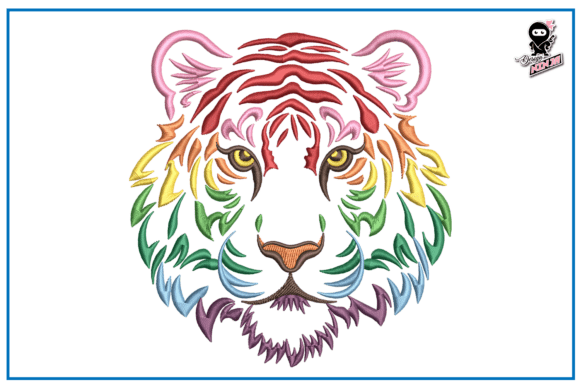
Rainbow Tiger: High-Quality Machine Embroidery Design
The intersection of vibrant color theory and intricate digitizing creates a unique challenge in machine embroidery. The Rainbow Tiger design represents a specific category of digital art that demands precision from both the file creator and the embroiderer. Unlike standard monochrome or simple two-color wildlife motifs, this design utilizes complex color blending and high stitch density to replicate the iridescent quality of a tiger’s coat through a prism effect. For creators looking to add a personal touch to projects, understanding the technical and aesthetic value of such a specialized pattern is essential for achieving professional results on clothing, home decor, or custom gifts.
Technical Precision and Stitch Integrity
High-quality machine embroidery designs are defined by their pathing and underlay structure rather than just their visual appearance on screen. The Rainbow Tiger pattern is engineered to minimize thread breaks and registration errors during the stitching process. When working with multi-colored wildlife designs, poor digitizing often leads to gaps between color blocks or puckering on lighter fabrics. This design addresses those common pain points through optimized stitch direction and appropriate pull compensation.
For professionals and hobbyists alike, this technical reliability translates directly to time savings and material conservation. A well-digitized file reduces the need for manual intervention at the machine. Instead of stopping to trim jump stitches or re-hoop fabric due to misalignment, the operator can trust the design to run smoothly. This efficiency is particularly valuable for small business owners fulfilling custom orders where turnaround time impacts profitability. The compatibility with most embroidery machines ensures that whether you are using a single-needle home machine or a multi-needle commercial unit, the file format and stitch sequence remain consistent and reliable.
Material Selection for Vibrant Outcomes
To fully realize the potential of the Rainbow Tiger design, fabric choice plays a critical role. The density required to create the gradient rainbow effect means this pattern performs best on stable, medium-to-heavyweight substrates. While it brings creativity and flair to any item, attempting to stitch this intricate design on sheer chiffon or lightweight jersey without adequate stabilization will likely result in distortion.
- Denim and Canvas: These fabrics provide the necessary structural support for high-density satin and fill stitches, making them ideal for jackets, tote bags, and upholstery.
- Terry Cloth and Toweling: The texture of these materials complements the bold lines of the tiger motif, though a water-soluble topping is recommended to prevent stitches from sinking into the pile.
- Quilting Cotton: Suitable for wall hangings and pillow covers, provided a cut-away stabilizer is used to maintain hoop tension throughout the extensive color changes.
Understanding these material pairings helps prevent wasted supplies and ensures the final piece reflects the quality of the digital file. Educators and workshop leaders can use this design as a practical case study in matching digitized art with appropriate textile foundations.
Elevating Custom Merchandise and Gifts
In a market saturated with generic clip art, unique and intricate designs serve as a differentiator for entrepreneurs and marketers. The Rainbow Tiger offers a distinct aesthetic that bridges the gap between traditional wildlife art and modern, stylized graphics. This versatility makes it suitable for diverse demographics, from Gen Z fashion enthusiasts seeking bold statement pieces to older collectors appreciating detailed animal portraiture.
When decorating clothing or creating personalized gifts, the emotional impact of the design matters as much as its technical execution. A rainbow tiger carries connotations of strength, diversity, and vibrancy that a standard orange-and-black tiger does not. For bloggers and content creators, showcasing such a visually striking project can drive engagement and demonstrate advanced embroidery capabilities. For gift-givers, it transforms a standard towel or hoodie into a bespoke keepsake. The ability to download and stitch these patterns immediately allows for rapid prototyping, enabling sellers to test new product lines without significant upfront investment in custom digitizing services.
Navigating Color Transitions and Thread Management
While the design is compatible with most machines, the user must still apply skill in thread selection and color management. The "rainbow" aspect implies a spectrum, but physical thread palettes vary significantly between brands. Achieving the intended gradient may require blending colors from different manufacturers or using variegated threads to reduce the total number of stops.
Professionals should view the provided color chart as a guideline rather than a strict rule. Testing on scrap fabric is a non-negotiable step when adapting this design for specific brand colors or client requests. For example, substituting neon threads for pastel ones completely alters the mood of the piece. This flexibility supports creativity but requires the user to understand color theory basics. Hobbyists may find this an excellent opportunity to expand their skills in manual color customization, while production shops can standardize a specific palette to streamline inventory and ensure consistency across bulk orders.
Considerations for Fit and Application
Despite its versatility, the Rainbow Tiger design has limitations that users must respect to avoid frustration. Due to the intricate detailing and color complexity, resizing this pattern requires caution. Scaling down below 70% of the original size may cause stitch overlap and loss of definition in the facial features. Conversely, scaling up significantly may expose gaps in the fill patterns if the digitizer did not account for extreme enlargement.
Users should also consider the hoop size requirements before purchasing or downloading. Intricate wildlife designs often maximize the stitching area to capture detail. If your machine only accommodates a 4x4 inch hoop, verify that a scaled version of this specific design exists or that the original fits within your constraints. Comparing options is wise; if your primary goal is quick, low-stitch-count production for baby bibs, this high-detail design may be overkill. However, for heirloom-quality projects where visual impact is paramount, the stitch count is justified by the outcome.
Supporting Creative Growth and Skill Development
Beyond the immediate output, working with complex files like the Rainbow Tiger serves an educational function. It forces the embroiderer to pay attention to tension adjustments, needle size selection, and stabilizer layering. Each successful stitch-out reinforces best practices that apply to all future projects. For educators teaching textile arts, this design provides a comprehensive platform for discussing digitizing logic, color interaction, and machine maintenance.
Freelancers and small business owners benefit from building a library of high-quality, tested designs. Relying on poorly digitized freebies often costs more in troubleshooting time than investing in premium files. By choosing patterns known for their stitch integrity and ease of use, creators protect their reputation and reduce operational friction. The Rainbow Tiger exemplifies this balance of artistic appeal and technical soundness, making it a practical asset for anyone serious about elevating their embroidery game.
Ultimately, the value of this design lies in its ability to facilitate meaningful creation. Whether you are enhancing a retail product line, crafting a sentimental gift, or simply exploring the boundaries of machine embroidery, having access to reliable, intricate patterns removes technical barriers and allows focus to remain on the art. Explore our shop for more stunning embroidery designs that share this commitment to quality and creativity, ensuring your next project is as successful as it is beautiful.